How Can Dedicated E-Billing Specialists Improve Cash Flow?
A law firm's billable work does not become cash until the resulting invoice is processed and collected. Revenue is realized when the invoice is accepted, approved, and ultimately collected. This makes electronic billing an important part of the firm's cash conversion process.
According to the 2026 Legal Billing & Payments Report, more than 80% of law firms surveyed reported experiencing payment delays, with billing and collection processes identified among the factors affecting payment performance. The very same report also found that firms using more structured billing and payment processes were better positioned to improve collection efficiency.
For firms handling a large volume of client matters, e-billing is therefore more than an administrative requirement. It is an operational function that connects time capture and invoice generation with accounts receivable and cash collection.
What Is an e-Billing Specialist?
An e-billing specialist is responsible for managing the electronic submission and processing of legal invoices according to client-specific requirements.
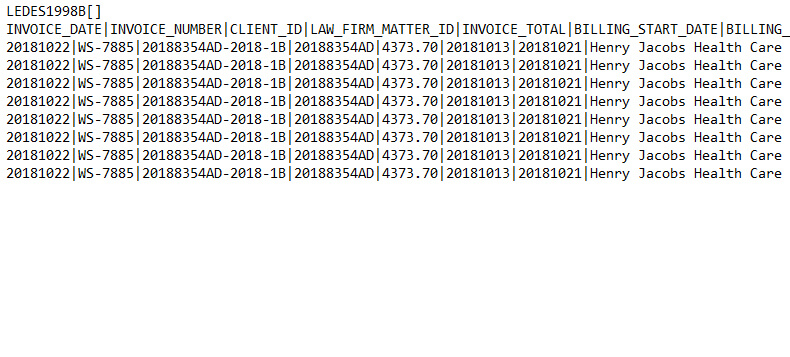
The role typically covers invoice preparation, electronic submission, billing guideline checks, invoice status monitoring, rejection management, and coordination with billing and accounting teams. Depending on the firm's workflow, specialists may also work with client portals, LEDES files, billing codes, matter information, and supporting documentation.
The value of the role comes from specialization. Law firms may work with numerous corporate clients, each using different electronic billing platforms and applying different billing rules. Managing these requirements consistently requires dedicated operational attention.
How E-Billing Affects Law Firm Cash Flow
Cash flow is affected by the time between completing billable work and receiving payment. E-billing sits directly within this cycle. The process is:
Billable work → Time capture → Invoice preparation → E-billing submission → Client acceptance → Invoice approval → Payment
A problem at any stage can extend the time required to convert completed work into collected revenue. For example, if an invoice is rejected because of an incorrect matter number or missing billing information, the firm may need to identify the problem, correct the invoice, and submit it again. The legal work has already been completed, but the associated revenue remains uncollected. Dedicated e-billing management is intended to reduce these avoidable points of friction.
• Reducing Invoice Rejections
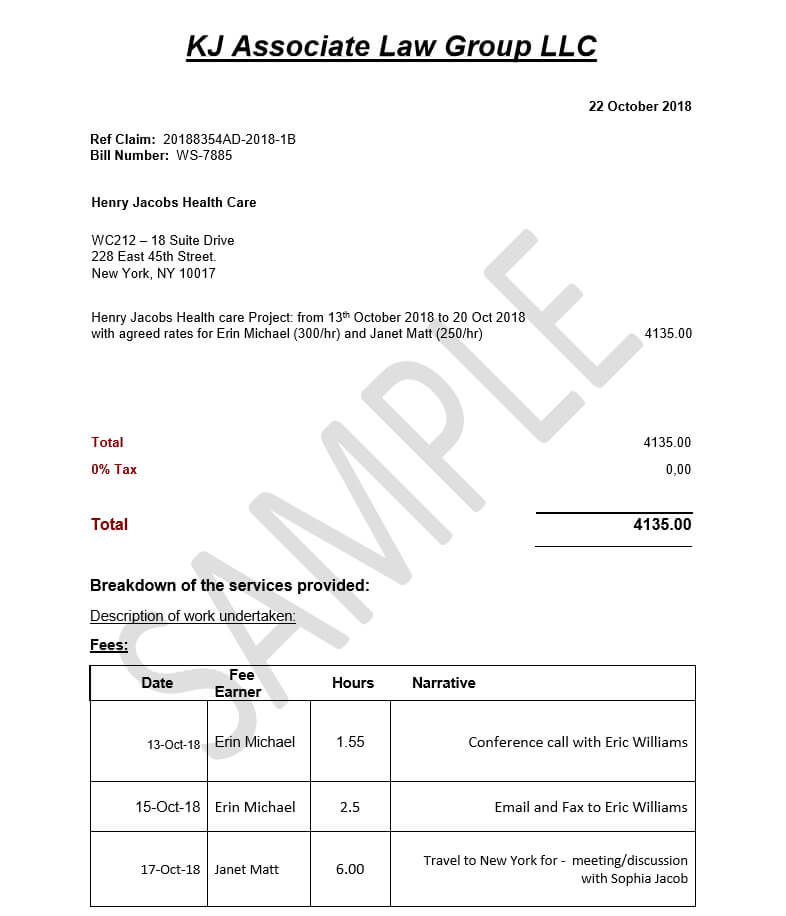
Invoice rejection is one of the clearest ways e-billing operations can affect collections. Corporate clients may require specific invoice formats, matter identifiers, billing codes, timekeeper information, rates, supporting documents, and submission procedures. Electronic billing platforms can also apply automated validation rules before an invoice enters the client's accounts payable process.
An e-billing specialist reviews invoices against these requirements before submission and addresses potential issues at the firm level. Preventing a rejection is generally more efficient than correcting one after submission. A rejected invoice can move back through the billing workflow, requiring additional review and resubmission before the client can process it.
• Managing Client-Specific Billing Requirements
A major operational challenge in legal billing is that clients do not necessarily use the same billing rules. One client may require LEDES billing through a particular electronic billing platform. Another may use a different portal and impose different requirements for time entries, expenses, billing rates, or invoice submission deadlines.
An e-billing specialist can maintain these client-specific requirements as part of the billing process. This actually reduces the dependence on attorneys or general administrative staff to remember individual client requirements and helps create a more consistent submission process across matters.
• Improving Invoice Submission Accuracy
Electronic billing depends heavily on structured data. An invoice may contain client and matter identifiers, timekeeper information, billing rates, task and activity codes, invoice numbers, dates, amounts, and other required fields. An error in one field can prevent the invoice from being accepted even when the underlying legal work is valid.
Dedicated specialists can review this information before submission and identify inconsistencies between the invoice and the client's billing requirements. The objective is not simply to produce a complete invoice but to produce an invoice that is processable by the client's billing system.
• Shortening the Rejection-to-Resubmission Cycle
Rejections cannot always be eliminated. Client systems can change, billing rules can be updated, and unexpected data problems can occur. The speed at which a firm responds to a rejection therefore matters. A dedicated e-billing specialist can monitor rejected invoices, identify the rejection reason, determine which information needs to be corrected, coordinate with the relevant attorney or billing team, and resubmit the invoice.
Without clear ownership, rejected invoices can remain in an exception queue while billing teams work through other priorities. The financial objective is to minimize the time an invoice spends between rejection and successful resubmission.
• Improving Invoice Visibility
Cash-flow management requires visibility into outstanding receivables. An invoice that has been submitted is not necessarily an invoice that has been accepted. Similarly, an accepted invoice may still be awaiting client approval or payment. A dedicated e-billing process can track these different stages and distinguish between invoices that are pending submission, submitted, rejected, accepted, approved, or awaiting payment.
This gives billing and finance teams a clearer view of where revenue is held up. Instead of treating all outstanding invoices as a single accounts receivable balance, firms can identify whether a delay originates from invoice preparation, electronic submission, client review, or payment.
• Reducing Administrative Work for Attorneys and Billing Teams
Legal professionals should not have to spend significant amounts of time resolving electronic billing issues that can be handled through a specialized billing function. When attorneys are required to respond repeatedly to invoice rejections, clarify billing data, or work through client portal requirements, the firm's administrative cost increases and professional time is diverted from legal work.
A dedicated e-billing function creates a defined operational layer between timekeepers and client billing systems. Specialists can handle routine billing administration while escalating only the issues that require attorney input. This creates a clearer division of responsibility between legal work, billing operations, and financial management.
• Supporting Faster Revenue Collection
The financial impact of e-billing is cumulative. A single rejected invoice may represent a small delay. Across hundreds or thousands of invoices, repeated submission errors, unresolved rejections, missed deadlines, and incomplete billing information can create a substantial amount of time between billing and collection.
Dedicated e-billing specialists help address these issues at the process level. They can identify recurring rejection reasons, monitor client-specific requirements, and establish more consistent submission procedures. Over time, this can improve the firm's billing cycle by reducing unnecessary delays between invoice creation and successful processing.
• Using e-Billing Data to Improve Billing Operations
e-Billing also generates operational data that can be used to identify process weaknesses. A firm can analyze rejection reasons, submission failures, processing times, client-specific requirements, and recurring billing errors. Patterns in this data can show whether particular clients, matters, billing codes, or internal processes generate a disproportionate number of problems.
This turns e-billing from a transaction-processing function into a source of operational intelligence. For example, if invoices for a particular client are repeatedly rejected because of the same data field, the firm can address the underlying process rather than repeatedly correcting individual invoices.
• e-Billing as Part of Revenue Operations
For larger law firms, e-billing should be viewed as part of the broader revenue cycle rather than as a standalone administrative task. Timekeeping determines what work is recorded. Billing determines how that work is converted into an invoice. E-billing determines whether that invoice can move through the client's billing infrastructure. Accounts receivable then manages the collection process.
Weakness at any point can affect the firm's cash conversion cycle. A dedicated e-billing specialist helps create operational ownership for the stage between invoice creation and successful client processing. This is particularly important for firms dealing with multiple corporate clients, high invoice volumes, and complex electronic billing requirements.
Conclusion
Dedicated e-billing specialists can improve law firm cash flow by reducing the operational friction between completed legal work and collected revenue. Their contribution extends beyond submitting invoices. They help maintain client-specific billing requirements, improve submission accuracy, reduce avoidable rejections, accelerate rejection resolution, monitor invoice status, and provide billing teams with greater visibility into outstanding invoices.
The financial value comes from making the billing process more predictable. When invoices are submitted correctly, exceptions are addressed quickly, and billing status is monitored, fewer operational problems stand between the firm's billable work and its cash collection.

.png)