Billing Reduction vs. Write-Off in Legal Billing
Accurate and transparent billing is a fundamental aspect of law firm operations. In today’s legal environment, where corporate clients apply rigorous billing guidelines and carefully scrutinize invoices, law firms are required to maintain strong internal billing controls. These controls help ensure consistency, compliance, and financial stability across matters and clients.
Two concepts that frequently arise in this context are billing reductions and write-offs. These are terms that are often used interchangeably; however, they represent different types of billing adjustments and occur at different stages of the billing process.
Although both billing reductions and write-offs refer to adjustments that reduce the amount of revenue ultimately collected by a law firm, they differ significantly in terms of timing, cause, and financial impact. According to standard legal billing practices, misunderstanding these differences can obscure the true sources of revenue leakage and hinder effective financial management.
Let us take a look at a detailed analysis of billing reductions and write-offs in the legal industry, their importance, and the best practices law firms can adopt to manage them effectively.
Understanding the Legal Billing Lifecycle
To understand billing reductions and write-offs more clearly, it is helpful to first consider where these adjustments occur within the legal billing process.
The typical legal billing lifecycle includes the following stages:
1. Time and expense entry by attorneys and staff
2. Internal pre-bill review
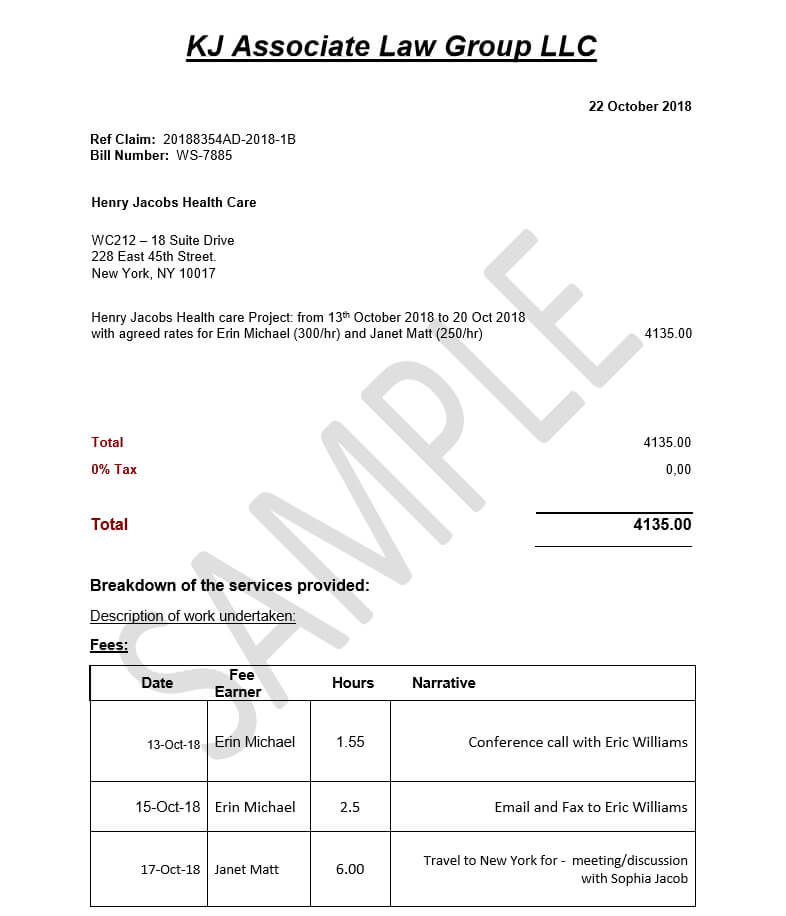
3. Invoice generation and submission
4. Client review and payment
These stages represent the standard flow of billing activities in most law firms. Billing reductions occur during the internal pre-bill review stage, while write-offs occur after invoicing, often as a result of client feedback, disputes, or nonpayment.
What Is a Billing Reduction?
A billing reduction is an internal adjustment made to time entries or expenses before an invoice is issued to the client. In such cases, the firm elects to reduce the billable amount to ensure compliance with billing standards, engagement terms, or client expectations.
Billing reductions are preventive in nature. These are typically applied during the pre-bill review process, where invoices are examined for accuracy, reasonableness, and guideline compliance.
Common Reasons for Billing Reductions
There are several reasons why billing reductions may be applied. Some of the most common include:
• Excessive time recorded for a particular task
• Work that exceeds the agreed scope of representation
• Inefficient staffing or improper delegation of work
• Billing rates that are inconsistent with engagement terms
• Client billing guidelines that limit reimbursable activities
These adjustments help ensure that the invoice reflects work that is reasonable, compliant, and defensible before it is submitted to the client.
Financial Treatment of Billing Reductions
Because billing reductions occur prior to invoicing, the reduced amount is never presented to the client. From an accounting perspective, this means that the revenue is not billed and therefore not recognized.
While billing reductions do reduce potential revenue, they generally have a less severe financial impact than write-offs. According to accepted legal billing practices, billing reductions are often viewed as a necessary part of prudent billing management rather than a negative outcome.
What Is a Write-Off?
A write-off refers to billed revenue that a law firm determines it will not collect after an invoice has already been issued. Write-offs typically occur when a client disputes an invoice, rejects certain charges, or refuses to pay the billed amount.
Write-offs are reactive in nature and are recorded as lost revenue in the firm’s financial records.
Common Causes of Legal Billing Write-Offs
There are several factors that commonly lead to write-offs in legal billing. These include:
• Client disputes over time entries or expenses
• Failure to comply with outside counsel billing guidelines
• Invoice rejections by corporate legal departments
• Post-billing fee negotiations
• Aged or uncollectible receivables
In many instances, these write-offs could have been avoided through more effective pre-bill review or clearer engagement terms at the outset of the matter.
Financial and Operational Impact of Write-Offs
Write-offs directly reduce realized revenue and can negatively affect matter-level and firm-wide profitability. In addition, high write-off levels may indicate systemic issues, such as inadequate billing oversight or insufficient communication with clients.
According to industry standards, persistent write-offs are often a concern for firm leadership and may prompt closer scrutiny of billing practices and internal controls.
Key Differences Between Billing Reductions and Write-Offs
Although billing reductions and write-offs both result in lower revenue collection, there are several critical differences between the two.
Timing
• Billing reductions occur before invoicing
• Write-offs occur after invoicing
Client Visibility
• Billing reductions are not visible to clients
• Write-offs typically involve client review, objection, or dispute
Revenue Recognition
• Billing reductions prevent overbilling before revenue is recognized
• Write-offs eliminate revenue that has already been billed
Risk and Significance
• Billing reductions are a routine part of billing discipline
• Write-offs often signal process failures or misalignment with client expectations
Billing Reduction vs. Write-Off: Comparative: A Quick Look
| Factor | Billing Reduction |
Write-Off |
| Stage | Pre-invoice | Post-invoice |
| Client Awareness | No | Yes |
| Nature | Proactive | Reactive |
| Accounting Impact | Revenue never billed | Revenue lost |
| Indicative Of | Process discipline | Billing or compliance issues |
Importance of Distinguishing Between Billing Reductions and Write-Offs
Properly distinguishing between billing reductions and write-offs allows law firms to more accurately assess the effectiveness of their billing processes.
Revenue Analysis and Profitability
Separating billing reductions from write-offs provides a clearer picture of:
• Pricing accuracy
• Staffing efficiency
• Realization rates
Without this distinction, law firms may misinterpret revenue losses and fail to address the root causes of billing inefficiencies.
Client Relationship Management
Billing reductions help prevent disputes by ensuring that invoices align with client expectations before submission. Write-offs, on the other hand, often occur after expectations have broken down, making them more disruptive to client relationships.
Common Issues Leading to Billing Adjustments
There are several recurring issues that contribute to billing reductions and write-offs. Some of the common issues leading to these billing adjustments include the following.
• Ineffective Timekeeping Practices
Vague, block-billed, or inconsistent time entries frequently lead to invoice challenges and client objections.
• Non-Compliance With Billing Guidelines
Many corporate clients enforce detailed billing rules. Failure to comply with these guidelines often results in rejected or reduced charges.
• Inadequate Pre-Bill Review
Weak or inconsistent pre-bill review processes allow billing errors to reach the client, increasing the likelihood of disputes and write-offs.
Best Practices for Managing Billing Reductions and Write-Offs
Law firms can reduce revenue loss by adopting structured and consistent billing practices.
• Strengthen Pre-Bill Review
Consistent and thorough pre-bill review is widely regarded as the most effective way to minimize write-offs.
• Provide Billing Training
Attorneys and staff should receive regular guidance on billing standards, client requirements, and best practices.
• Use Billing and Legal Operations Technology
Automated billing and legal operations tools can help flag guideline violations and improve overall accuracy.
• Monitor Billing Metrics
Tracking billing reductions and write-offs by matter, client, and timekeeper helps firms identify trends and take corrective action.
Billing Reductions and Write-Offs Under Alternative Fee Arrangements
Alternative fee arrangements often require internal billing adjustments to align time tracking with agreed pricing models. In such cases, billing reductions may be expected and appropriate.
Write-offs, however, frequently arise when scope changes are not clearly documented or communicated during the course of the matter.
Role of Legal Operations and Finance Teams
Legal operations and finance teams play a central role in overseeing billing practices, enforcing standards, and reporting on revenue realization.
Their involvement ensures consistency, accountability, and continuous improvement across the firm’s billing processes.
Conclusion
Billing reductions and write-offs are distinct mechanisms within legal billing that serve different purposes and carry different implications. Billing reductions reflect proactive management and disciplined billing practices. Write-offs, while sometimes unavoidable, often indicate areas that require further review and improvement.
Law firms that clearly distinguish between the two, track them consistently, and address the underlying causes are better positioned to protect revenue, improve operational efficiency, and maintain strong client relationships.
If you would like to know more about legal billing best practices, revenue realization strategies, and methods for reducing billing leakage, or if you are looking to better understand how billing reductions and write-offs affect law firm profitability, do not hesitate to connect with our team now.

.png)